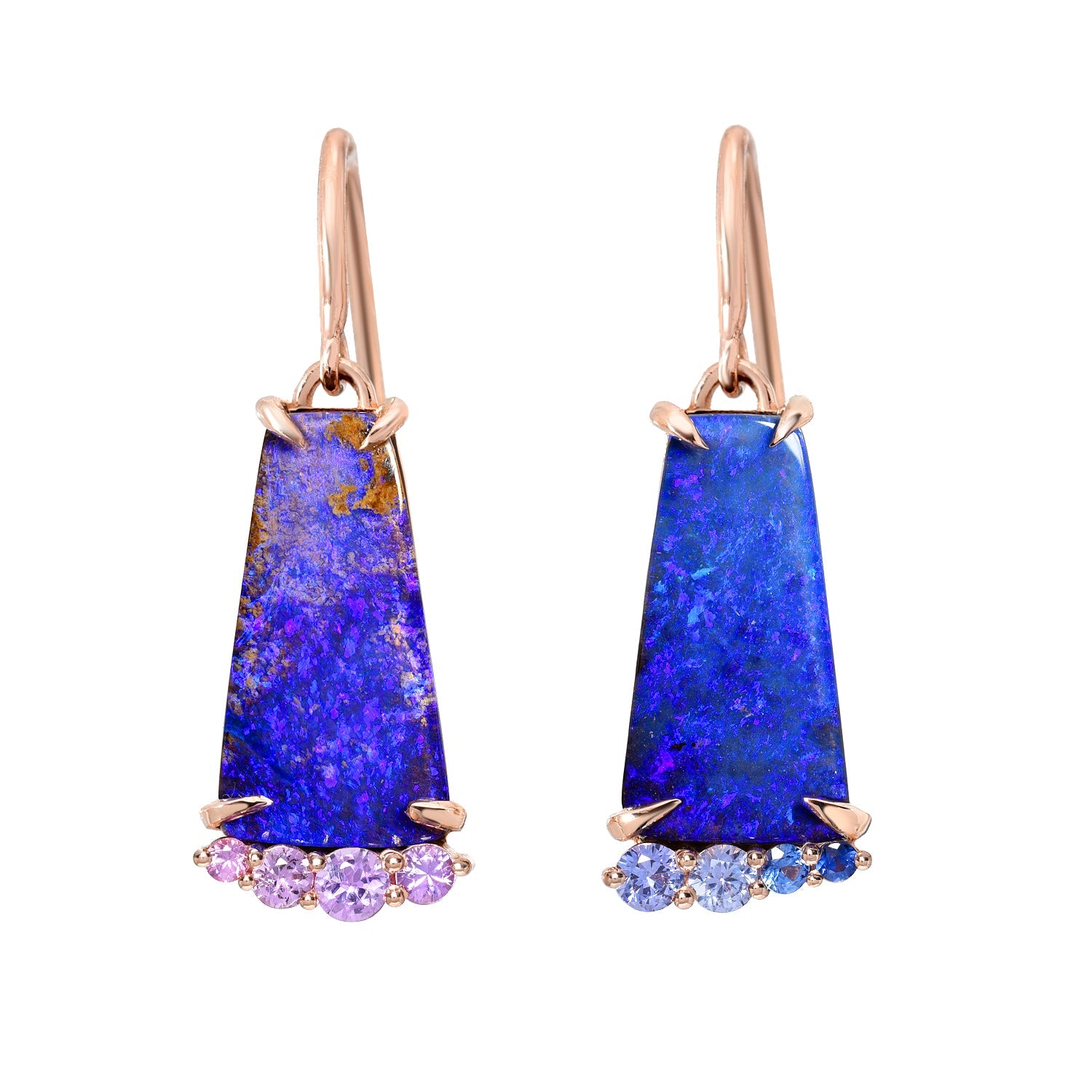
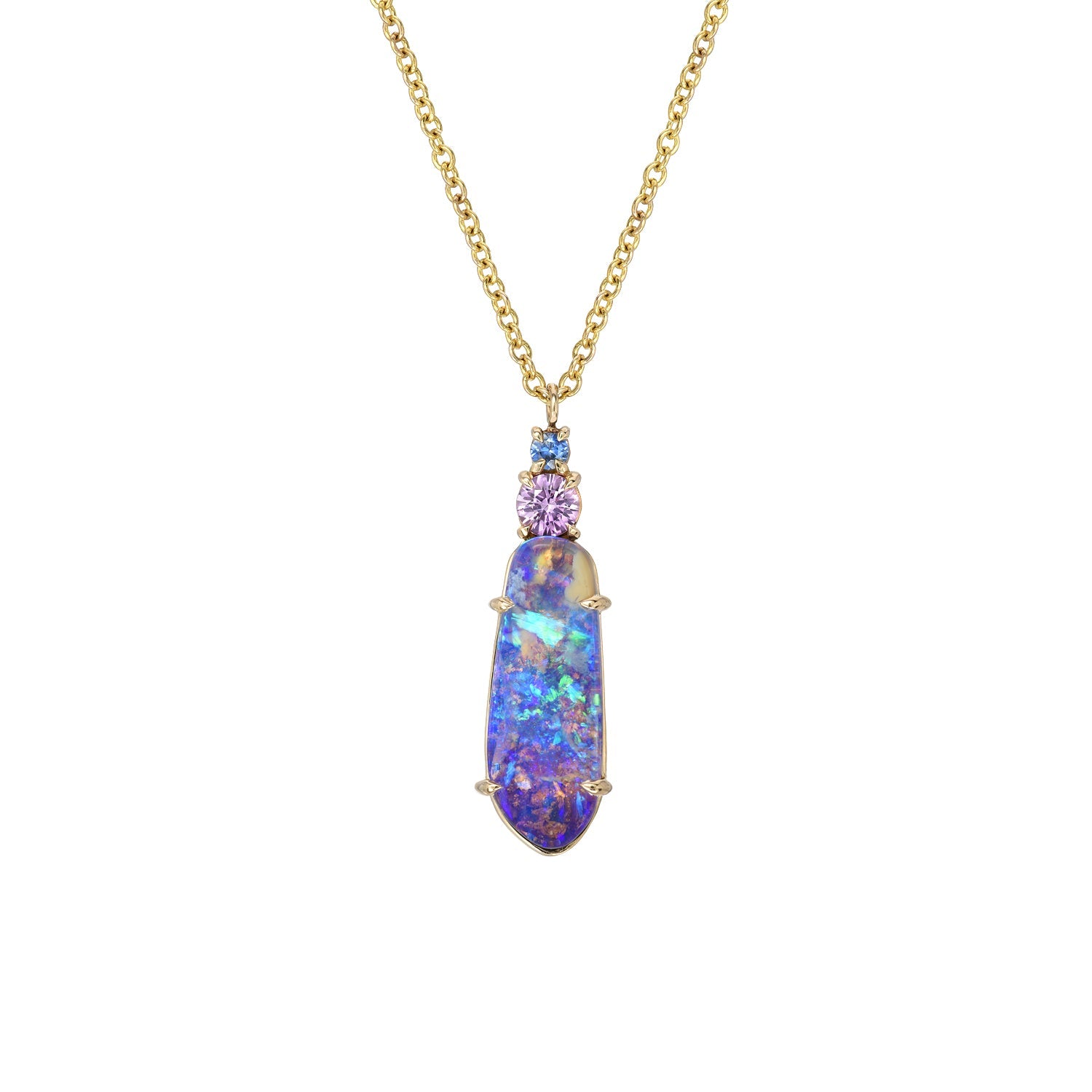
A captivating transformation of color
nicole gluckmanWhat do you see when you look at this image?

If you guessed a tie-dyed fabric, you're correct. But it’s not the type you likely made as a kid at summer camp, but rather a much more methodically crafted version.

The method used to create the intricate pattern is known as shibori. While it is most famously practiced in Japan, and surviving examples from the archipelago exist—notably those donated by Emperor Shōmu to the Tōdai-ji Buddhist temple in Nara in 756 CE—shibori is actually believed to have originated in ancient China about 500 years prior. A 238 CE document lists a “spotted cloth” gifted by a queen to an unidentified recipient that closely matches the description.
Silk was a common fabric used to create shibori for the aristocracy and wealthy patrons. However, ancient sumptuary laws prohibited the lower classes from wearing it, so they adapted the method to other fabrics, such as cotton and hemp, to enhance and renew their humble clothing. It was a way to transform waste into art.


The term comes from the Japanese word shiboru, which means “to wring, squeeze, or press.” Much like Western tie-dye, the resist-dyeing method involves manipulating the fabric into various shapes and then binding it so that the dyes do not penetrate the concealed areas. Regardless of the artisan skill level behind each stunning pattern, there is always an element of surprise, since they never know exactly what the results will be until the process is complete. Still, each specific technique of shibori—kanoko, arashi, itajime, and nui included among them—produces its own hallmark pattern.

Itajime shibori—predominantly a clamping technique—features precise geometric, repeatable patterns created by angular blocks clamped into place, preventing the penetration of dye in desired locations. The captivating result is a repeated grid pattern, oftentimes hexagon and star patterns like the one secretly woven into the gallery on the back of our latest creation. (It’s a pretty cool likeness.)

In addition to highly stylized techniques, shibori also differentiates itself from the Western version through its use of a singular dye. Its trademark deep blue hue is sourced from molecules found in the leaves of the indigo plant. A lengthy process of extraction and reduction (using alkaline and fermenting solutions) converts the naturally insoluble pigment into a water-soluble state (so that it can penetrate fibers), transforming it into a greenish color in the process. It’s only when the process is complete and exposed to oxygen that the pigment reverses course, turning back into its insoluble, blue form that permanently locks into the fibers. We love the idea that this stunning color comes from nature and evolves from blue to green and back to blue when kissed by the air we breathe.

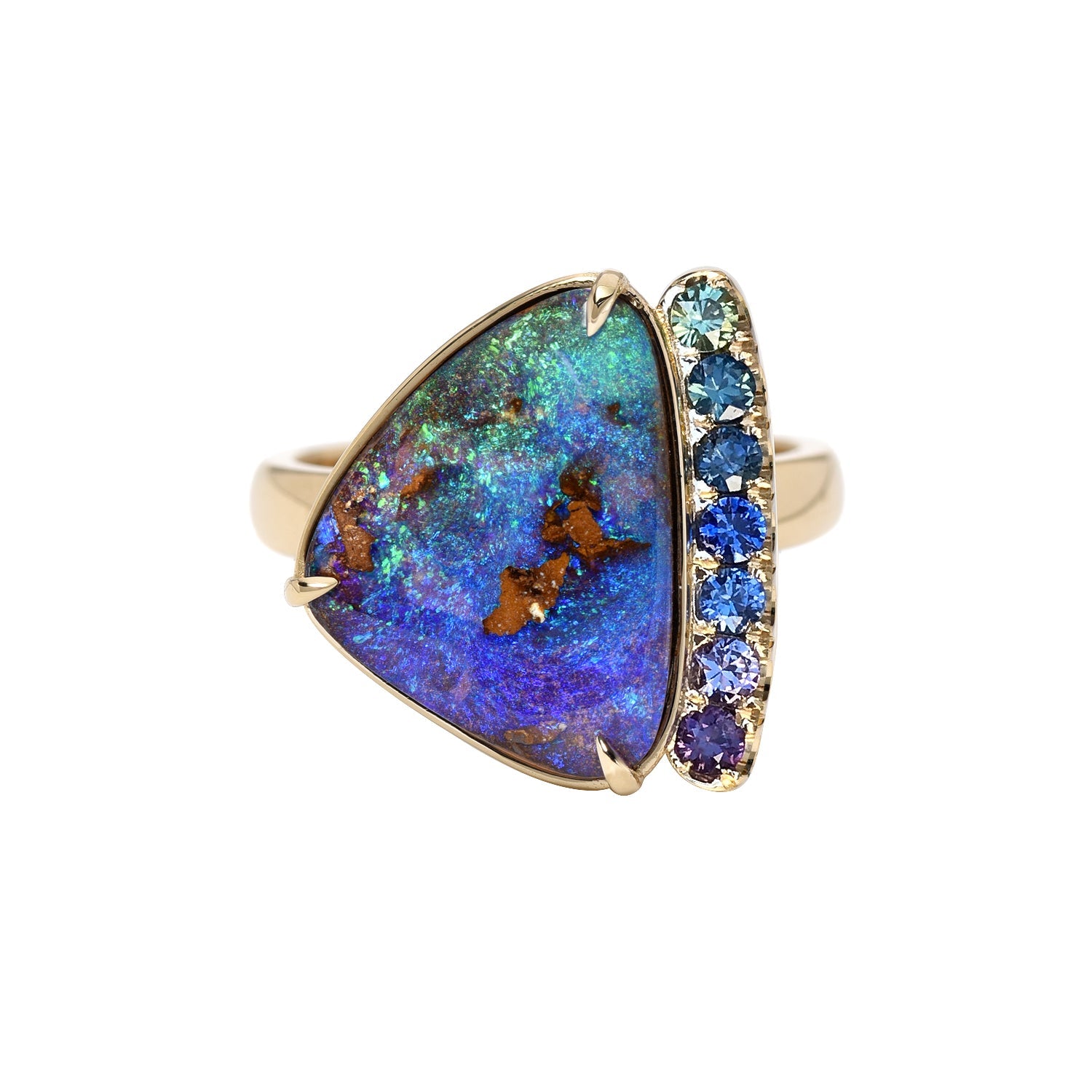
This beautiful transformation is captured within our Shibori ring, featuring an epic black opal with deep inky blues and indigo, cobalt, and teal green hues in an ombré sapphire halo that wrings out sensational chromatic tones. While our technique may differ from the Far East, we see an ancient tied textile in every potent flash.