An Ancient Story Frozen in Time
nicole gluckmanIf I were to step about 100 million years back in time, the Australia that I visited this past summer would look like a very different place. In fact, much of the land would be submerged under water, and it would be much colder than it is today, as it was still tethered to Antarctica. The resulting environment was a blend of temperate and subtropical conditions that existed alongside seasonal ice and glaciation.

The large body of water blanketing the terrain was part of prehistoric Australia’s landscape, and is known as the Eromanga Sea. The inland sea engulfed a third of the continent, extending from the modern-day northern coast down through Queensland and Central Australia. Though shallow and frigid, it was home to a vast ecosystem of living and non-living things that forged a rare and unique set of conditions—the prelude to Australia's most famous gem.

As time unfolded, rising land masses and an ever-changing climate led to the eventual disappearance of the Eromanga Sea. Its silica-rich water (facilitated by nearby volcanic mineral deposits and single-celled algae called diatoms with cell walls made of opaline silica) drained through the sedimentary rock layers. (Fun Fact: diatom algae fossils are what diatomaceous earth products like drying racks are made of!) As it retreated, the ancient sea deposited silica into rock cavities, eventually transforming into the opals that I cherish—and it also fossilized creatures that once inhabited its waters during the Early Cretaceous period, capturing some of them in opal form (opal fossils)—an origin story frozen in (colorful) time. Among these opalized fossils, paleontologists have discovered an opalized pliosaur (named Eric), rare shelled sea organisms that roamed the sea floor, as well as non-opalized creatures, such as plesiosaurs (large marine reptiles with a resemblance to the Loch Ness monster), and dolphin-like ichthyosaurs.

Beneath the ancient seabed lies the enormous Great Artesian Basin, the world's largest and deepest underground freshwater reservoir that is vital to life in the now arid landscape. It is believed that the GAB holds three times the amount of water as all the world’s oceans. The basin has undergone quiet transformations over the years, becoming one with the ocean during periods of high sea levels, then retreating anew. Some of Australia's most well-known opal mining towns, including Coober Pedy and Lightning Ridge, are located where ancient tides once stirred. These mines are the sources of many of the opals that you see in my bespoke jewelry.

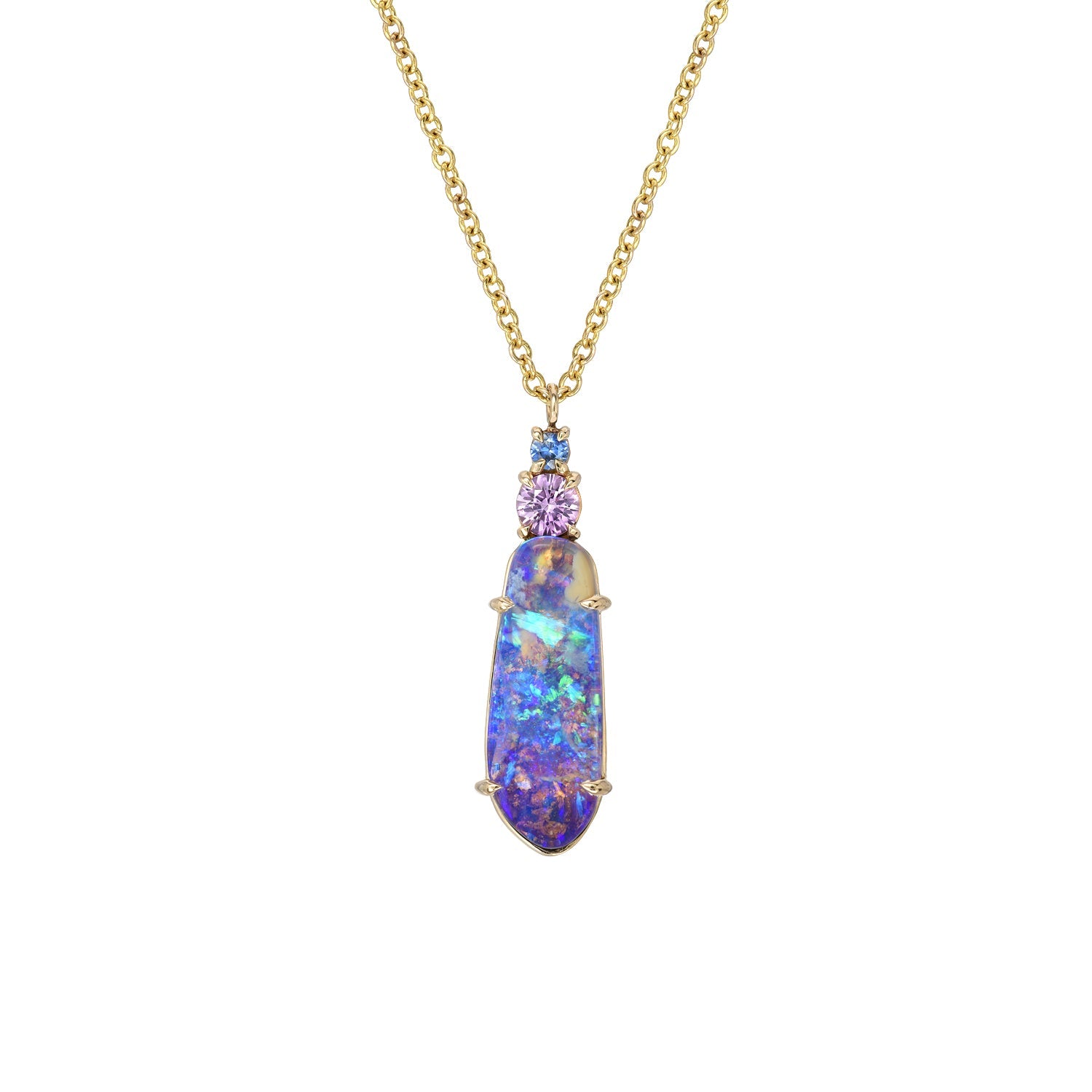
History’s epic saga gracefully reveals itself through the primordial opal in the Prelude necklace. Within the glimmering gold bezel caressed by a soft satin finish, a volcanic haze slowly fades, revealing a glimpse of sparkling blue waters, together whispering tales of both past and present.