Love isn't Always Perfect
nicole gluckmanWhen you think of the symbols most often associated with love, the first to come to mind are likely hearts, roses, doves, and cupids… probably not a building. But for Shah Jahan, a 17th-century Mughal Emperor, architecture was the perfect way to express his undying love for his favorite wife (and the only one he chose).

Legend has it that it was the empress consort herself, Mumtaz Mahal, who inspired the creation of the magnificent mausoleum that would later become known as the Taj Mahal. The name translates to ‘crown palace,’ but it was originally called Rauza-e-Munawwara, which means ‘The Illustrious Tomb.’ It’s believed that, upon her deathbed, she asked three things of Shah Jahan: never to marry again, to look after their children (she bore 14!), and to build a funerary tomb over her grave resembling paradise on earth. He spent roughly the next two decades of his life erecting her final resting place.
As one of the New Seven Wonders of the World and a UNESCO World Heritage Site, the Taj Mahal—located in Agra, India—is perhaps the ultimate symbol of love and dedication. Though we don’t believe love is measured in dollars, it’s hard to deny just how much Mahal meant to Shah Jahan, especially considering how much time and money he spent completing her mausoleum and its surrounding structures and landscape—nearly 1 billion dollars in today’s money. A closer look at the engineering behind the architecture helps explain the opulent memorial.

The complex consists of a mausoleum, a main gateway, a red sandstone mosque, a jawab (a near-mirror image of the mosque built to maintain visual symmetry), and a garden with a central reflecting pool and roughly 50 fountains. The mausoleum’s facade is constructed nearly entirely from marble that was transported from 240 miles away by way of animal-drawn carts (think elephants—more than 1,000 of them!). And within the stunning white marble lie semi-translucent crystals that have a color-changing effect on the structure from morning to night, which are believed to represent the different moods of Mumtaz Mahal—a soft pinkish hue at sunrise, brilliant white under the midday sun, and a dazzling gold at sunset.

And that’s not the structure’s only visual trick. Semi-precious stone inlay—known as Parchin Kari—forms intricate floral designs and geometric patterns across the building’s facade, creating an illusion of depth whereby seemingly flat columns appear multifaceted. Artfully crafted from materials like jade, jasper, lapis lazuli, and mother of pearl, their lustrous nature blends with the play of light, resulting in an effervescent glow.
Quranic verses also decorate the many arches and doorways—notably inlaid black jasper calligraphy that cleverly increases in size on higher sections, making it appear uniform when viewing from the ground level. It’s a brilliant mathematical use of font applied to maintain the symmetrical theme.

Up-close look at Quranic Verses and Parchin Kari Designs
The geometry of the buildings themselves hides additional optical illusions in plain sight. Similar to the clever calligraphy design, the four minarets that surround the main edifice look perfectly vertical to the human eye, but they actually tilt outward by about two degrees so they would fall away from and prevent damage to the central dome in the event of a catastrophic earthquake. And when entering the complex from the main gate, the Taj Mahal seems massive (in fairness, it really is), but as you walk closer, it—impossibly—appears to shrink. That’s because the arch was designed to narrow the field of vision.

The only unintentional ‘flaw’ in its perfect symmetry (perceived, anyhow) occurred when the tomb of Shah Jahan was placed next to that of the empresses’. Though bearing the same shape and ornamental designs, Shah Jahan’s is larger and off-center.
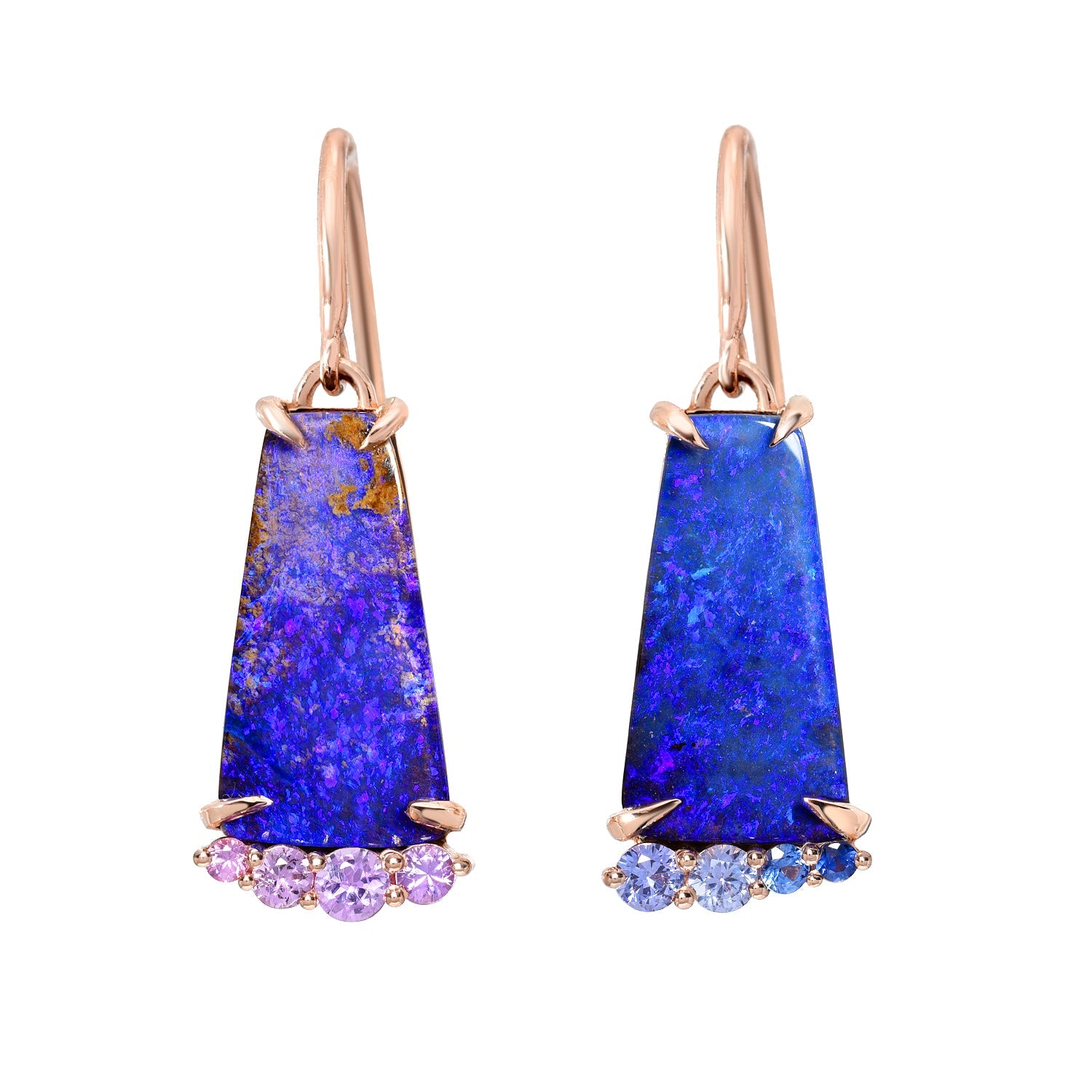
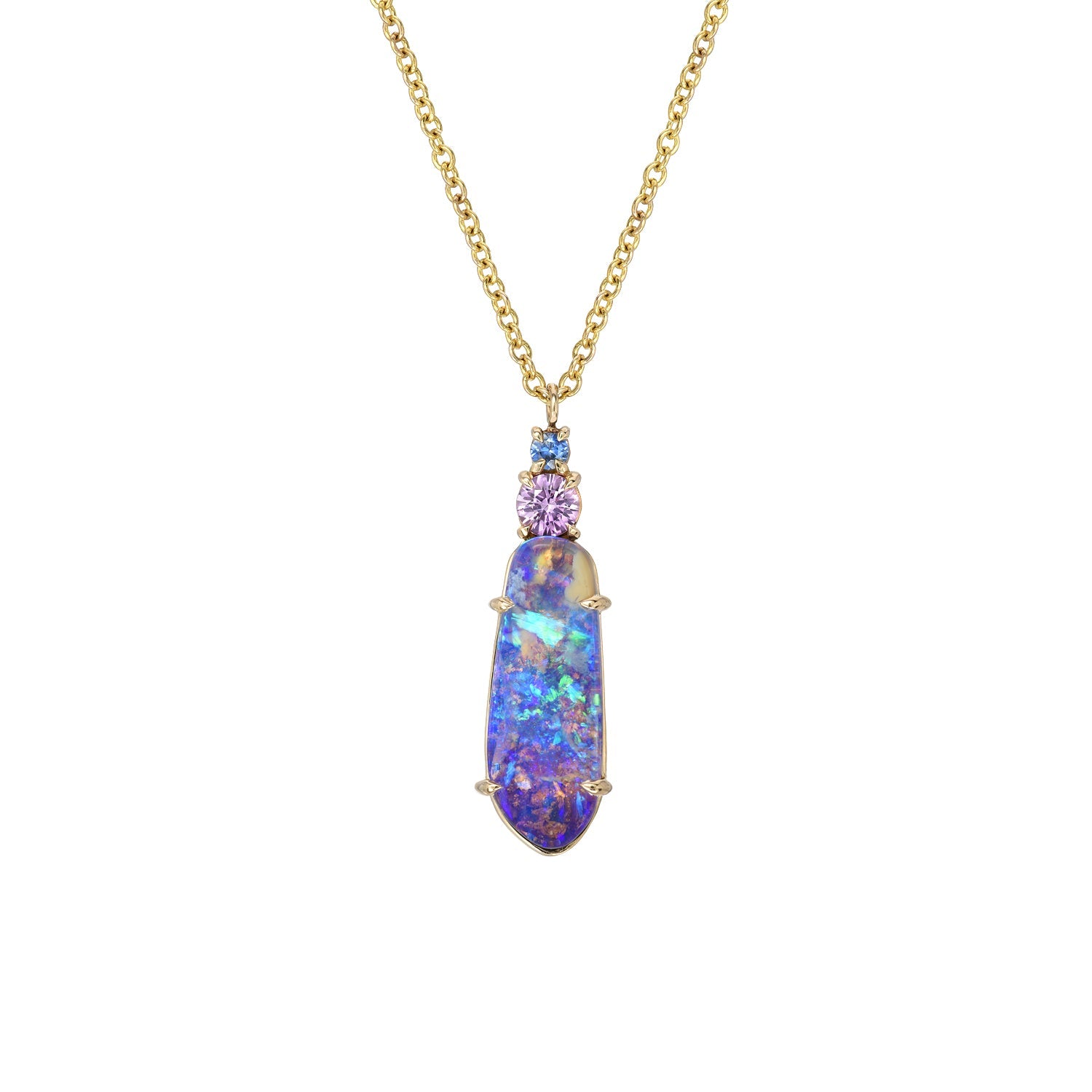
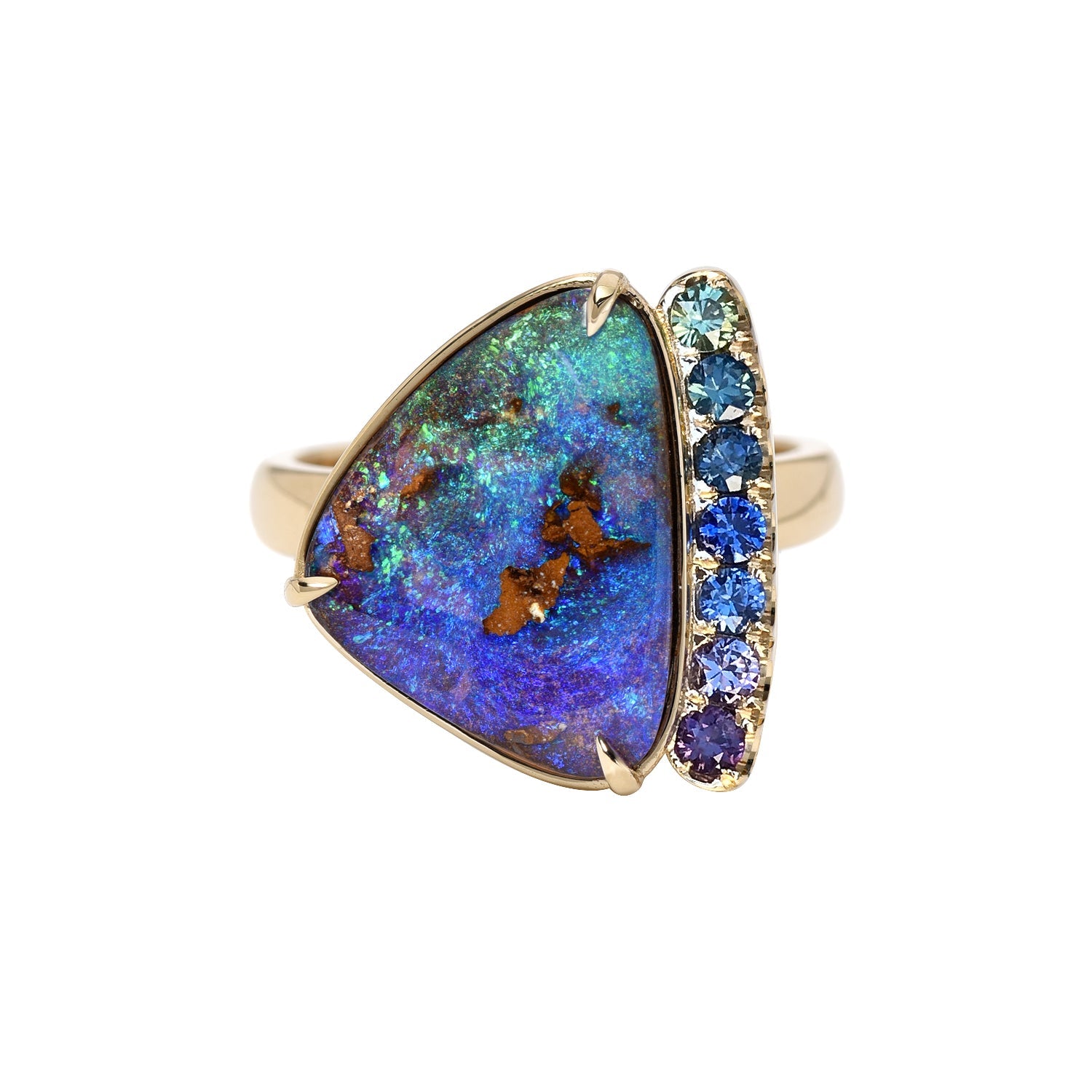
When it comes to our sculpted sentiments, the love and stories behind each piece matter more than their symmetry, as do the colors that bring them to life. Our creations of devotion resist the rules of geometry and follow their own beautifully unique hearts.