The Town That Lives Underground
nicole gluckmanThe Aboriginal people of South Australia's desert had a straightforward name for the place: kupa-piti. It translates, with characteristic directness, to ‘white man in a hole.’ The Kokatha weren't being unkind—they were simply describing what they saw.
When opal was discovered there in 1915, a wave of prospectors arrived and began digging—into the earth, into the rock, into the red clay beneath—with such focused intensity that the holes became the defining feature of the landscape.

Coober Pedy Tailings - Leftover mining material after sifting through for opal. Each pile corresponds to a hole in the ground.
Unlike many of the Wild West mining towns in the United States that were abandoned once gold prospects ran dry, Coober Pedy—as the town sign reads—is home to year-round residents from over 70 different nationalities who have built their lives there, complete with churches, hotels for tourists, and underground homes.


The reason for these underground homes comes down to physics. Coober Pedy sits in one of the most inhospitable stretches of outback Australia, where trees cannot survive (except for the one Bob Amorosi created for his kids using scrap metal) …

… and conventional buildings become ovens. Because summer temperatures above ground have historically and regularly exceeded 45°C (110°F), the earliest miners, practical as they were stubborn, stopped coming back up. Instead, they carved rooms into the sandstone roughly 3 meters below the surface, where the earth holds a stable 22 to 23°C (~73°F) year-round—cool and constant, regardless of what the sun is doing above.
They put in ventilation pipes. They added rooms. They stayed. Today, roughly half the town's population lives underground. Not in shafts, but in homes with living rooms, kitchens, and, in at least one case, an underground swimming pool.

That pool is located in Faye's Underground Home, and the story of how it came to exist is one I keep returning to. In 1962, three women acquired a single dugout room that had previously served as a postman's storage space. Equipped with picks, shovels, and extraordinary patience, Faye Nayler, Ettie Hall, and Sue Bernard created a complete home over the next ten years. Together, they expanded the space by hand, carving room after room from the stone, eventually adding a wine cellar, a guest suite, and the first underground swimming pool ever built in Coober Pedy. They later turned their home into a museum (tours are still available today).
What I love about this story is not just the audacity of it—three women, a pickaxe, and a decade—but the quiet logic behind it. While building their home and lives, they were simultaneously mining for opals.
As the original prospectors discovered, the desert landscape has more to offer than just shelter. Families in Coober Pedy break through opal seams while digging room extensions often enough that it's become part of local lore. One couple—Ron and Jenny Gough—reportedly found $50,000 worth of opal in their stairwell. A different family, digging a bedroom extension for their then-infant son, Dan Measey (from Outback Opal Hunters), found a blue-green crystal opal the size of a cigarette packet, worth $1,500, in the walls. Stories like these are apparently not uncommon. People build their homes here, and the treasure finds them.

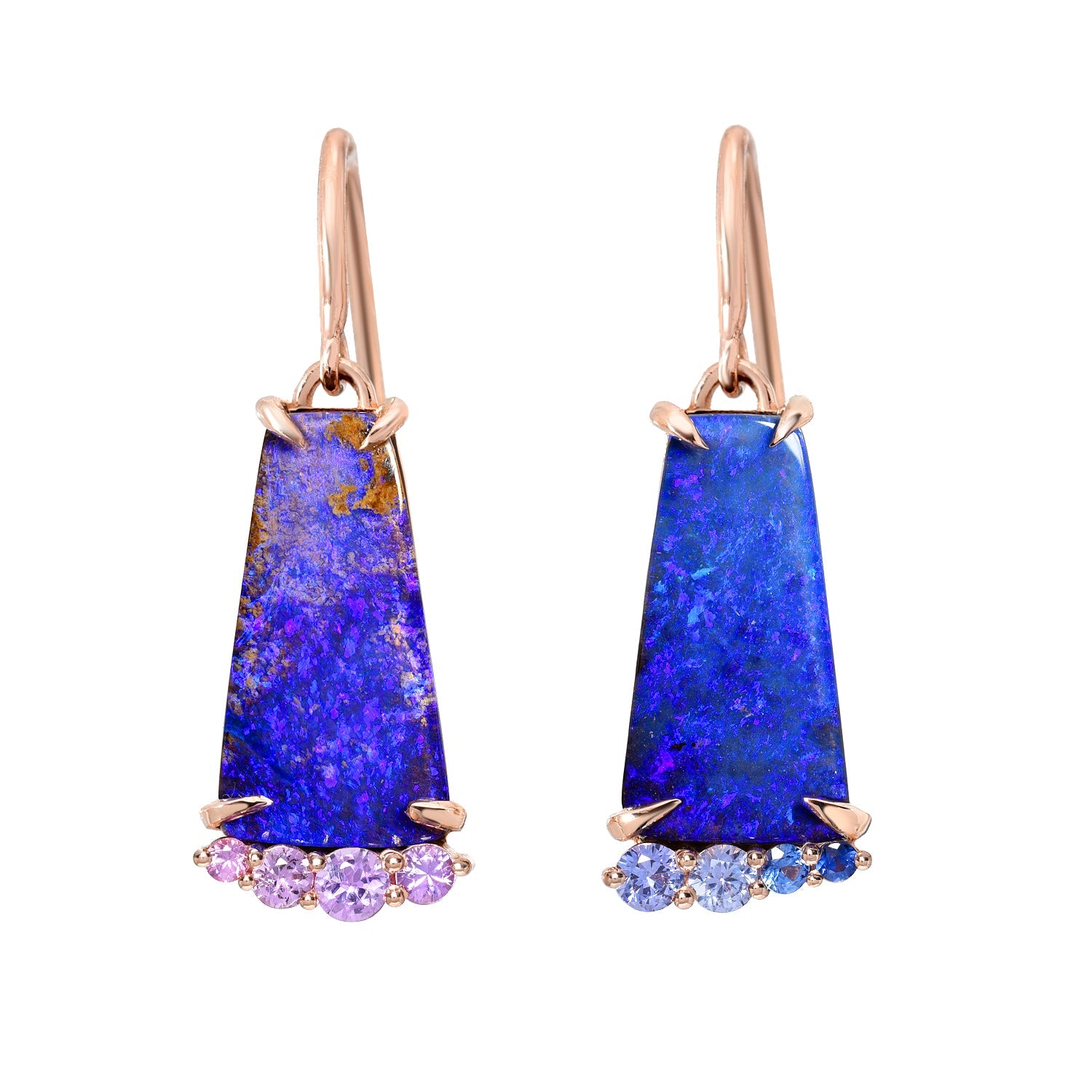
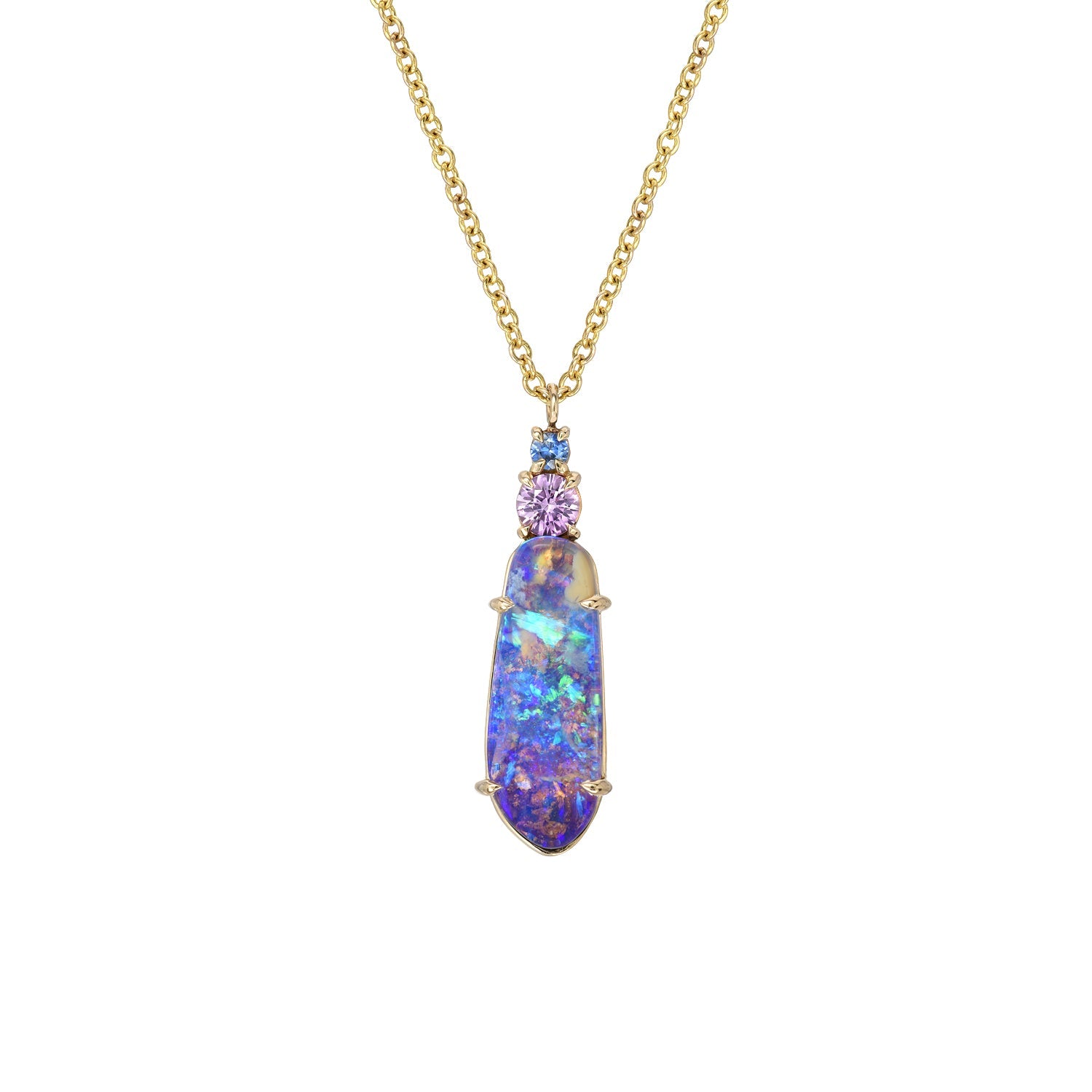
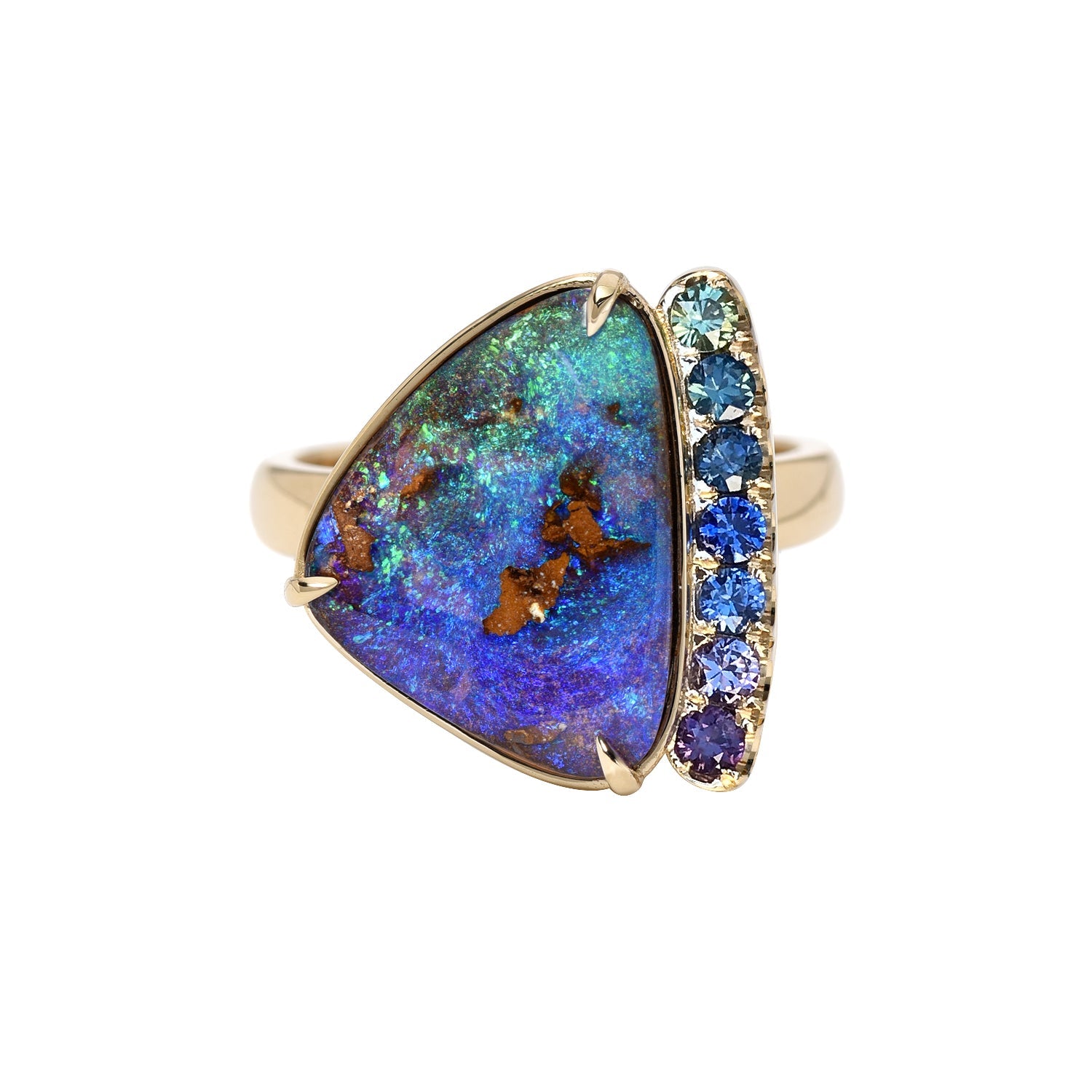
This is where the stone in our Alpine Reverie Australian Opal Necklace comes from—literally. The crystal opal at the center of this piece was found in Coober Pedy, and it carries the particular cool luminosity craved by those working under the scorching Aussie sun: flecks of blue and green that flash and shift, like light moving through still underground air. The surface of the stone has what we can only describe as ‘tracks’ carved through it—visual trails that speak to passage and time.
The piece is set in 14-karat gold with a pavé diamond halo that catches light from every angle. And tucked onto the back of the pendant is a private inscription—a message for its owner alone.
Faye built ten years into the walls of her home. This opal built millions into its own. It carries a record of where it came from, and a secret kept just for you. Few things on earth take that long to become beautiful. Fewer still end up belonging to just one person. To wear it is to carry a small piece of that ancient outback with you wherever you go.