The Birthstone That Scared A Continent
nicole gluckmanHave you ever noticed that some months carry two or three birthstones, while others get just one? We have. And we’ve wondered why.
If you were born in October, you probably know you’ve got two — opal and tourmaline. Opal has been October’s stone since 1912. Tourmaline didn’t arrive until 1952, forty years later.

The dates trace back to two organizations that still curate the list today: Jewelers of America (JA) and the American Gem Trade Association (AGTA) — which joined the effort decades later. Between them, the list has only been revised a handful of times since 1912 — and each time, for a stated, practical reason. In 1952, JA added four companion stones, tourmaline among them, to give shoppers more choice. In 2002, AGTA and JA — with the Gemological Institute of America and others weighing in — added tanzanite to December, because the stone had quietly become the second-most sought-after blue gem, surpassed only by sapphire. In 2016, they added spinel to August; AGTA’s president explained: “As tastes change, fashion evolves… it is important that our industry evolve.” Every addition was about giving people more to choose from.

What’s telling is who never got a companion. Diamond (April), emerald (May), ruby (July), and sapphire (September) — gemology’s traditional “big four” precious stones — have anchored their months alone on the official list since 1912, through multiple rounds of revisions that added stones everywhere else. They’ve never needed one.

Opal hasn’t had that luxury. In 1829, Sir Walter Scott published Anne of Geierstein — a story we’ve told before, and one worth revisiting — featuring Lady Hermione, whose enchanted opal loses its fire and turns to ash the moment she’s near holy water, right before she dies.

Scene from Sir Walter Scott’s Anne of Geierstein (Hermione), oil painting, artist unconfirmed (possibly William Long or George Cattermole). Wellcome Collection, CC BY 4.0.
It was fiction. It tanked opal sales across Europe anyway.
It’s tempting — and repeated on gem-trade sites — to read tourmaline’s 1952 arrival as opal’s insurance policy for the trade, added while opal’s reputation was still recovering. No record actually confirms this. Call it speculation with suggestive timing.
What can be confirmed are opal’s actual properties: it’s a soft stone — 5.5 to 6.5 on the Mohs scale, next to sapphire’s 9 — that holds structural water, which means it wants to be worn and cared for, not sealed in a safe and forgotten. But softness was never a flaw waiting to be excused. It’s the same quality that makes a live flower more arresting than a silk one.

The world’s most exacting jewelry houses clearly agree. Dior’s creative director, Victoire de Castellane, calls opal her favorite stone — “a very poetic stone, an invitation to a fairy tale.” In 2019, Cartier built Zemia — a cuff and earring set from its Magnitude collection — a 77.27-carat matrix opal, setting it against blue and purple sapphires and orange garnets. Neither of these houses treats opal’s softness as a liability. Each treats the stone’s pattern — no two exactly alike — as the entire point.
As it turns out, opal’s most theatrical modern moment may belong to Gucci. Hortus Deliciarum, the house’s first-ever high jewelry collection, includes a 30-carat carved white crystal opal shaped into an Ouroboros — the ancient symbol of a serpent devouring its own tail — set atop engraved yellow gold. It’s an old idea, renewal with no beginning and no end, carved into the same stone a novelist once tried to convince the world was cursed.

AI-generated rendering inspired by Gucci’s Hortus Deliciarum Ouroboros ring. Not an official Gucci image, and not a physical piece in NIXIN’s collection.
So no — October’s two chosen birthstones aren’t the product of some ancient, mystical, written-in-the-stars tradition. They’re the record of an industry occasionally widening its list, and, maybe once, hedging a bet on a stone it never needed to worry about. Opal has spent the seventy-plus years since proving that bet, if it was one, unnecessary — one Dior fairy tale, one 77-carat Cartier cuff, one Ouroboros at a time.🐍
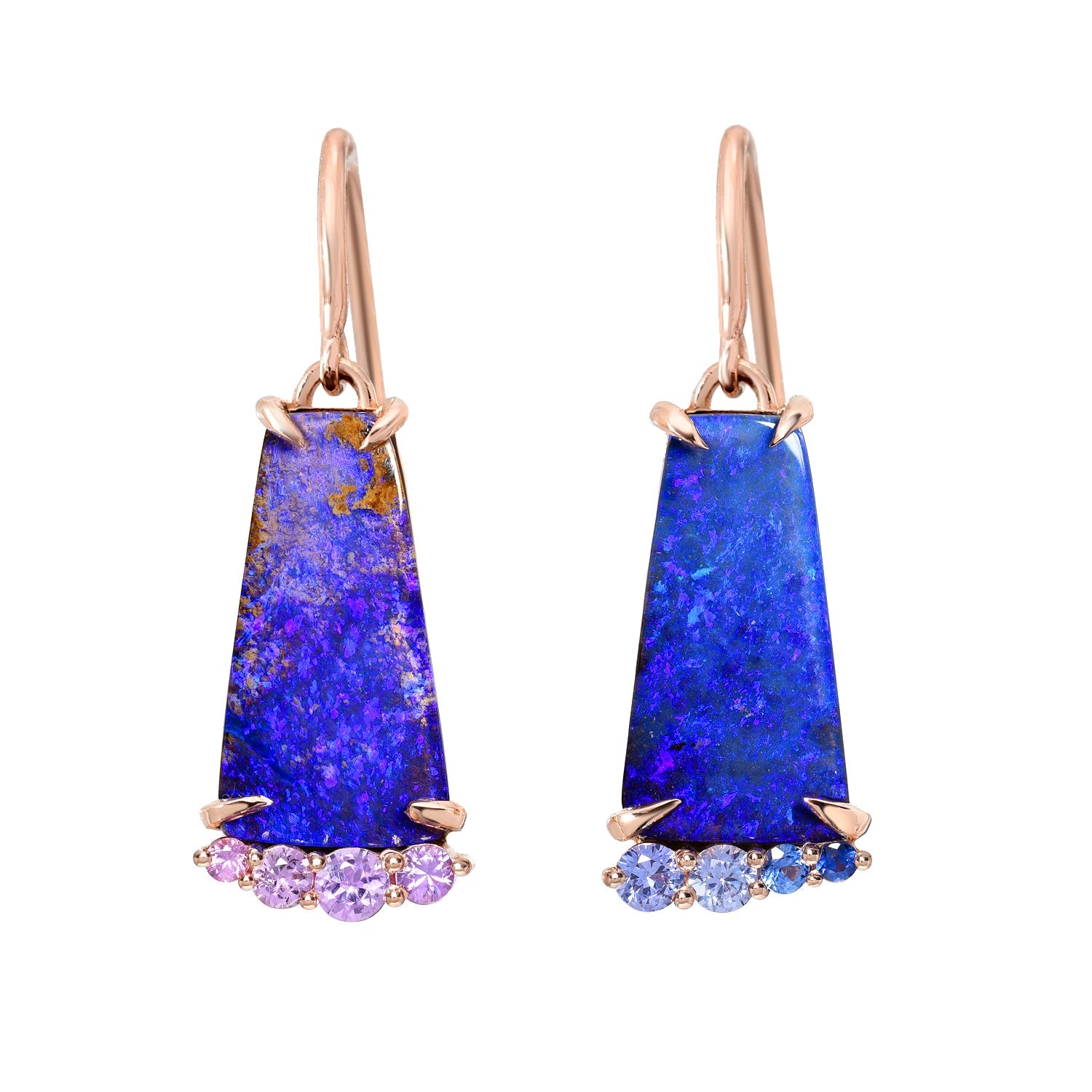
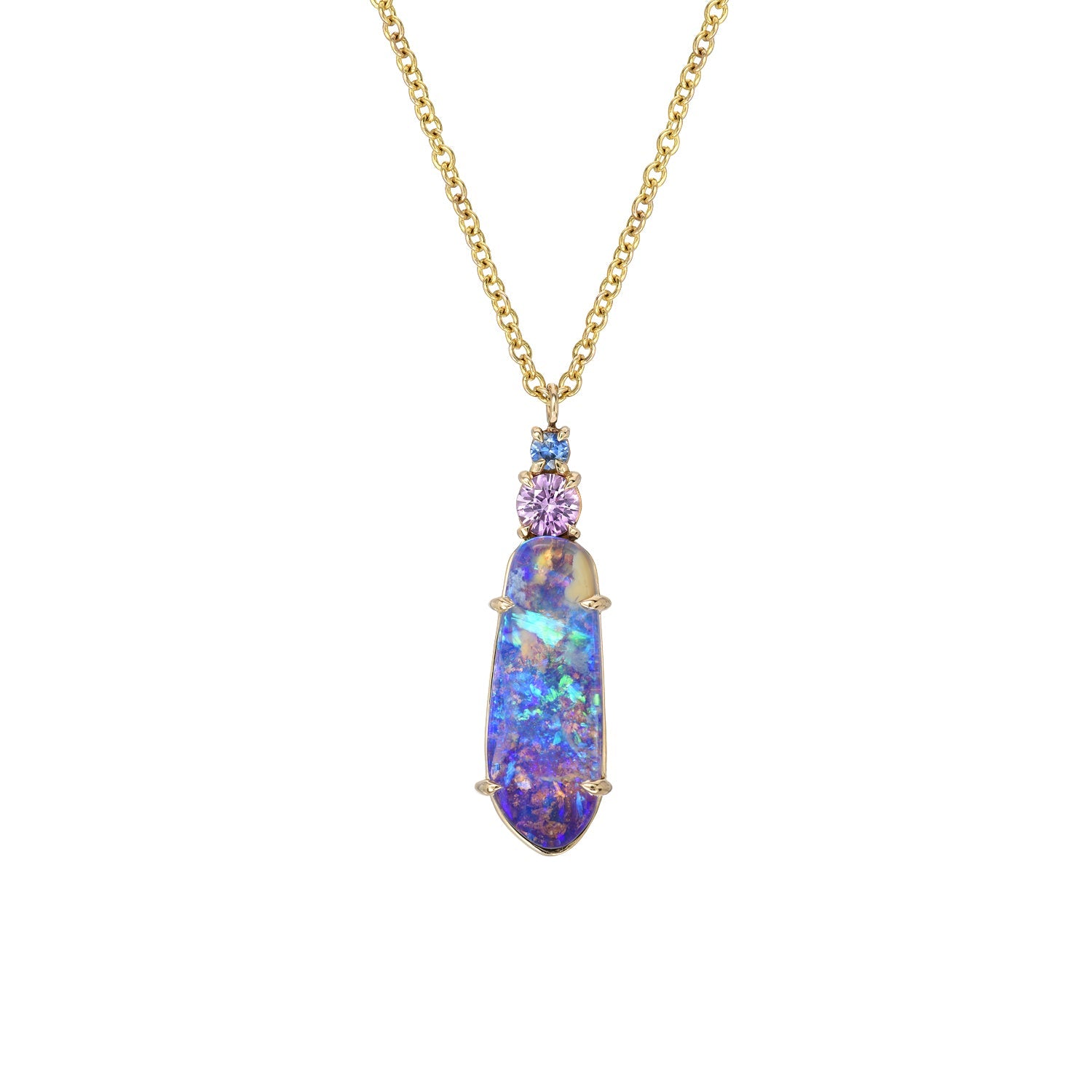
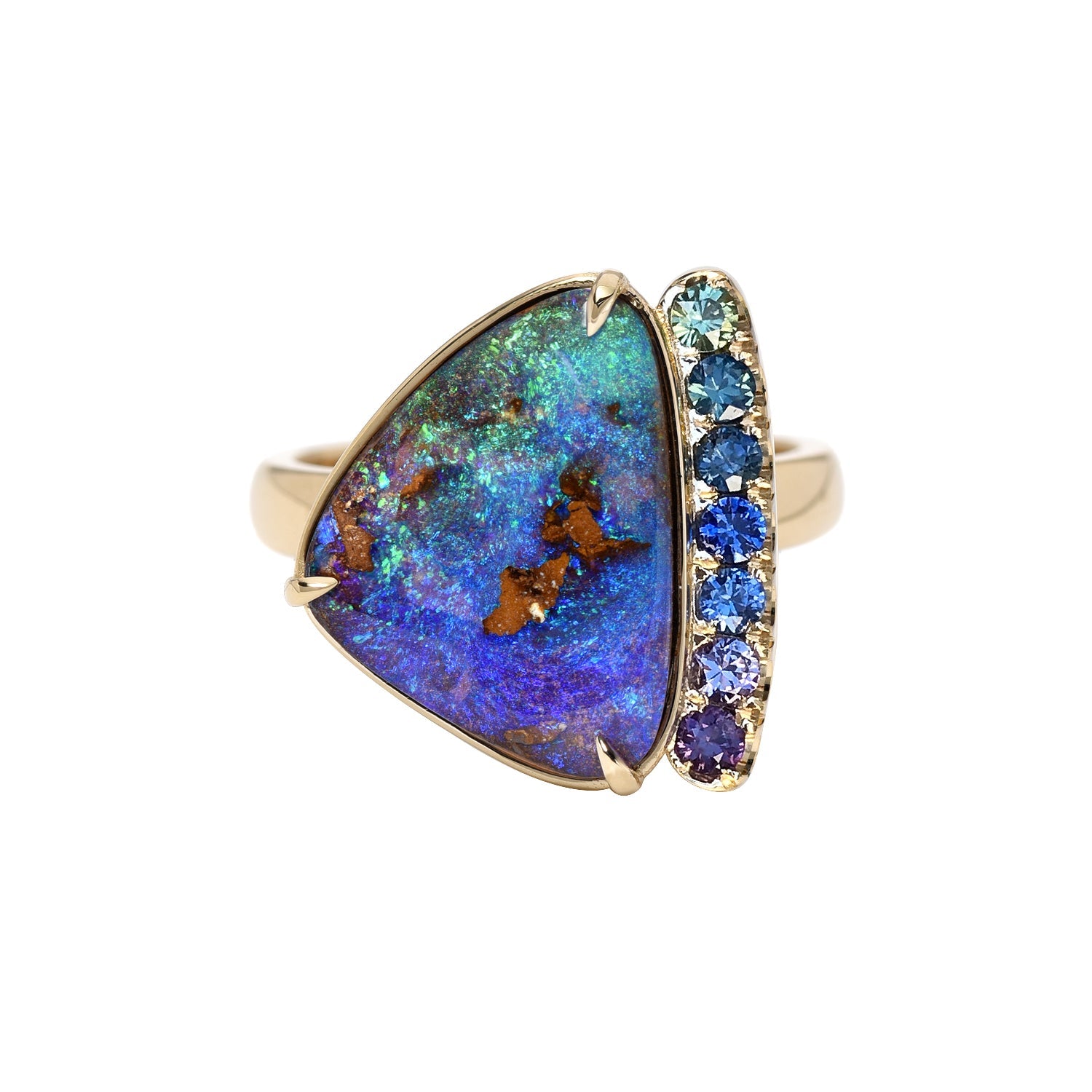
Here are both halves of October’s story — the tourmaline that arrived as backup, and the opal that never actually needed an understudy. One slides from rose into lavender into jade like the last hour of daylight. The other catches light the way sea foam does at sunrise. Choose a side, or do what October did — keep both. The Empress Imbued Tourmaline Necklace and the Marseille for a Day Australian Opal Earrings.

Warmest wishes,
Nicki
Founder & Designer, NIXIN Jewelry
PS: Spoiler alert: we’ve quietly added another tourmaline gradient — in a stack of five dainty rings — to the site, not yet findable by anyone but you. Consider the next 72 hours a preview, before it goes public at full price. SHOP WITH CODE: 85OFF